
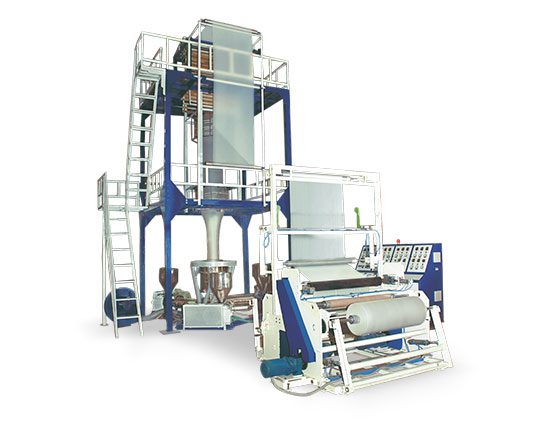
A Monolayer Blown Film Plant is one of the most widely used solutions for manufacturing plastic films used in packaging, agriculture, retail, and industrial applications. As demand for cost-effective and high-quality film production continues to grow, manufacturers often compare monolayer technology with advanced multilayer systems such as AB, ABA, and ABC blown film plants. Understanding the differences between these technologies helps businesses choose the right extrusion solution for their production requirements.
Selecting the right blown film plant impacts production costs, film quality, material efficiency, and long-term profitability. While monolayer systems offer simplicity and affordability, multilayer technologies provide greater flexibility and enhanced film performance. Therefore, understanding the strengths of each system is essential before making an investment decision.
Understanding Blown Film Technology
Blown film extrusion is a manufacturing process used to produce plastic films. During this process, plastic resin is melted and forced through a circular die. Air is then introduced into the molten tube, creating a bubble that expands upward.
As the bubble cools, it forms a continuous plastic film. The film is subsequently flattened, wound into rolls, and prepared for packaging, printing, lamination, or bag-making applications.
For additional information about plastic processing standards and industry developments, manufacturers can refer to ASTM International (https://www.astm.org) and the Plastics Industry Association (https://www.plasticsindustry.org).
What Is a Monolayer Blown Film Plant?
A Monolayer Blown Film Plant produces plastic film using a single layer of polymer material. Since the entire film consists of one material composition, the production process remains simple, efficient, and economical.
Many manufacturers prefer monolayer technology for products that do not require advanced barrier properties or complex film structures.
Common applications include:
- Shopping bags
- Carry bags
- Garbage bags
- Packaging liners
- Agricultural films
- General-purpose packaging
Manufacturers seeking reliable single-layer film production can explore the Monolayer Blown Film Plant:
https://ashokextrusiontech.com/product/monolayer-blown-film-plant/
Advantages of a Monolayer Blown Film Plant
Lower Investment Cost
Because the equipment design is less complex, the initial investment remains significantly lower than multilayer systems.
Easy Operation
Operators can learn and manage production more efficiently. As a result, training requirements and operational challenges are reduced.
Lower Maintenance Costs
The machine contains fewer components. Consequently, maintenance becomes easier and downtime can be minimized.
Cost-Effective Production
For standard packaging products, monolayer systems provide excellent value while maintaining competitive production costs.
Limitations of Monolayer Systems
Despite their advantages, monolayer films have certain limitations.
- Limited barrier properties
- Lower puncture resistance
- Reduced material flexibility
- Fewer customization options
Therefore, manufacturers producing specialized packaging often consider multilayer alternatives.
What Is a Multilayer Blown Film Plant?
A multilayer blown film plant combines multiple layers of plastic materials into a single film structure. Each layer performs a specific function and contributes to the overall film performance.
A multilayer blown film plant combines multiple layers of plastic materials into a single film structure. Each layer performs a specific function and contributes to the overall film performance.
For example:
- One layer may provide strength.
- Another layer may improve sealing properties.
- A third layer may enhance printability.
As a result, multilayer films often outperform monolayer films in demanding applications.
Furthermore, manufacturers can combine different polymers to achieve customized performance characteristics, making multilayer technology highly attractive for modern packaging requirements.
What Is an AB Blown Film Structure?
An AB blown film structure consists of two material layers combined into a single film.
Compared with monolayer films, AB structures provide improved strength, better material distribution, and enhanced production flexibility. In addition, manufacturers can optimize material usage without significantly increasing production costs.
AB films are commonly used for:
- Industrial packaging
- Shopping bags
- Agricultural films
- Protective packaging
What Is an ABA Blown Film Structure?
An ABA blown film structure contains three layers arranged as:
A – B – A
In this design, the outer layers are identical while the middle layer uses a different material composition.
This structure allows manufacturers to use premium resin on the outer surfaces while utilizing recycled or lower-cost material in the center layer. Consequently, production costs can be reduced without compromising film quality.
Businesses looking for efficient multilayer production can explore the AB/ABA Multilayer Blown Film Plant:
https://ashokextrusiontech.com/product/ab-aba-multilayer-blown-film-plant/
Benefits of ABA Technology
- Reduced raw material costs
- Better material utilization
- Consistent film quality
- Improved strength
- Higher production efficiency
What Is an ABC Blown Film Structure?
An ABC blown film structure consists of three completely different layers. Each layer can be customized independently to achieve specific performance objectives.
For example:
- Layer A may improve printability.
- Layer B may increase strength.
- Layer C may enhance sealing performance.
Because every layer serves a unique purpose, ABC technology offers exceptional flexibility and superior film performance.
Manufacturers producing premium packaging films often invest in an ABC Three Layer Blown Film Plant:
https://ashokextrusiontech.com/product/abc-three-layer-blown-film-plant/
Advantages of ABC Technology
- Superior film strength
- Enhanced sealing properties
- Better print quality
- Greater customization options
- Improved overall performance
Monolayer vs Multilayer Blown Film Plant Comparison
| Feature | Monolayer Plant | Multilayer Plant |
| Structure | Single layer | Multiple layers |
| Investment Cost | Lower | Higher |
| Operation | Simple | More advanced |
| Film Quality | Standard | Superior |
| Material Efficiency | Moderate | High |
| Customization | Limited | Extensive |
| Applications | General packaging | Advanced packaging |
How to Choose the Right Blown Film Plant
Several factors should influence your decision.
Production Requirements
If your products require basic packaging films, a monolayer system may be sufficient. However, advanced applications often benefit from multilayer technology.
Budget
Companies with limited budgets typically prefer monolayer systems because of their lower investment costs.
Future Growth
Businesses planning long-term expansion should evaluate multilayer systems that support product diversification and premium packaging solutions.
Market Demand
As packaging standards continue to evolve, customers increasingly demand stronger, lighter, and more efficient films. Therefore, multilayer technology can provide a competitive advantage.
A Monolayer Blown Film Plant remains an excellent choice for manufacturers seeking affordable, reliable, and efficient film production. It offers simple operation, lower investment costs, and dependable performance for standard packaging applications.
However, multilayer systems such as AB, ABA, and ABC blown film plants provide greater flexibility, improved film quality, and enhanced material optimization. Moreover, these technologies enable manufacturers to meet the growing demands of modern packaging markets.
By understanding the differences between monolayer and multilayer blown film technologies, businesses can choose equipment that aligns with their production goals, budget, and future growth plans. Ultimately, investing in the right blown film plant can improve profitability, product quality, and long-term competitiveness.