
The demand for low density polyethylene film continues to grow across packaging, agriculture, logistics, and industrial sectors. Known for its flexibility, strength, moisture resistance, and cost-effectiveness, LDPE film is widely used for bags, liners, shrink films, and protective packaging.
To achieve consistent film quality, manufacturers need the right LDPE film making machine, proper processing parameters, and an efficient production setup. Understanding the LDPE film manufacturing process helps businesses improve output, reduce waste, and maintain product quality.
Modern blown film solutions from Ashok Extrusion Tech help manufacturers produce high-quality LD film for a wide range of applications while maintaining production efficiency.
What Is LDPE Film?
Low density polyethylene film is a flexible plastic film produced from LDPE resin through the blown film extrusion process. It offers excellent clarity, toughness, flexibility, and moisture resistance.
Because of these properties, LD film is commonly used in packaging industries where durability and lightweight performance are important.
Common characteristics include:
- High flexibility
- Good impact resistance
- Excellent sealability
- Moisture protection
- Lightweight structure
- Cost-effective production
These advantages make low density polyethylene film one of the most widely used packaging materials worldwide.
What Is an LDPE Film Making Machine?
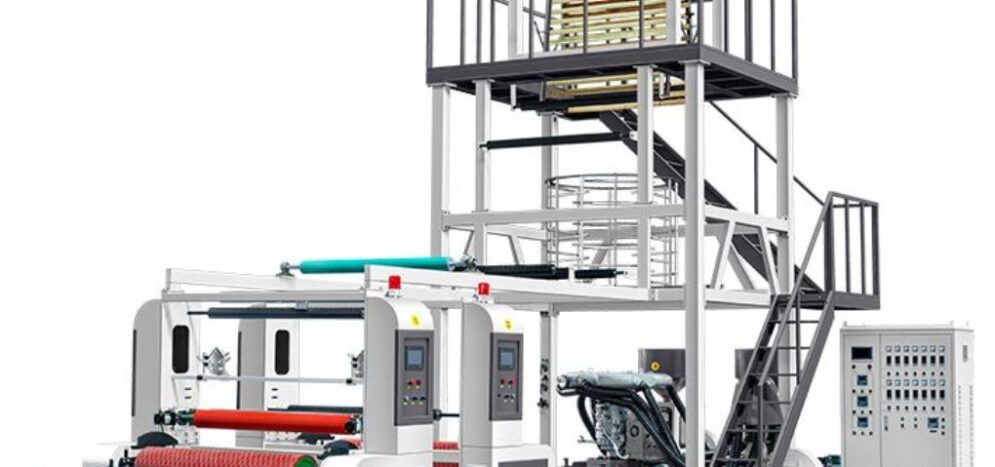
An LDPE film making machine is a blown film extrusion system that converts LDPE granules into thin plastic film rolls.
The machine melts raw material, forms it into a tubular bubble, cools it, and winds the finished film onto rolls for further processing.
Most manufacturers use a blown film plant for LDPE film production because it delivers consistent thickness, better strength, and high production efficiency.
Depending on production requirements, businesses can choose from:
- Monolayer blown film plants
- AB/ABA multilayer blown film plants
- ABC three-layer blown film plants
For standard packaging applications, many manufacturers prefer the Monolayer Blown Film Plant available at https://ashokextrusiontech.com/product/monolayer-blown-film-plant/.
LDPE Film Manufacturing Process
The LDPE film manufacturing process follows a structured sequence to ensure uniform film quality and efficient production.
1. Raw Material Feeding
The process begins with feeding LDPE granules into the hopper of the extrusion machine.
Depending on product requirements, manufacturers may also add:
- Color masterbatch
- Additives
- UV stabilizers
- Slip agents
- Anti-block agents
The quality of raw materials directly affects the performance of the final LD film.
2. Melting and Extrusion
Inside the extruder barrel, the screw rotates and moves the material forward while generating heat.
The LDPE resin melts uniformly and reaches the desired processing temperature before entering the die head.
Proper temperature control is critical in the LDPE film manufacturing process because overheating can affect film quality.
3. Film Bubble Formation
The molten plastic exits through a circular die.
Air is introduced through the center of the die, creating a bubble shape. This bubble is gradually expanded to achieve the required film width and thickness.
Bubble stability is one of the most important factors in producing high-quality low density polyethylene film.
4. Cooling Process
The film bubble passes through an air cooling system that solidifies the molten plastic.
Efficient cooling helps maintain:
- Uniform thickness
- Better transparency
- Improved mechanical strength
- Stable production output
Modern blown film plants use advanced air ring technology for better cooling performance.
5. Collapsing and Winding
After cooling, the bubble passes through collapsing frames and nip rollers.
The film is then wound into rolls for storage, printing, cutting, or bag-making operations.
This final stage completes the LDPE film manufacturing process.
Machine Components Required for LDPE Film Production
A modern LDPE film making machine consists of several critical components.
Extruder Unit
The extruder melts and conveys the raw material.
Die Head
The die determines film width, thickness, and overall quality.
Air Ring
The air ring cools the film bubble and improves thickness consistency.
Bubble Stabilization System
This system helps maintain uniform bubble shape during production.
Haul-Off Unit
The haul-off section pulls the film upward at a controlled speed.
Winder
The winder collects finished film into rolls for downstream processing.
Together, these components ensure efficient LDPE film production and consistent product quality.
Applications of LDPE Film
The versatility of low density polyethylene film makes it suitable for numerous industries.
Common applications include:
- Shopping bags
- Garbage bags
- Packaging liners
- Shrink films
- Protective packaging
- Courier bags
- Textile packaging
- Food packaging
- Industrial covers
- Agricultural films
As packaging requirements continue to grow, demand for high-quality LD film remains strong across multiple sectors.
Production Tips for Better Film Quality
Achieving superior film quality requires more than just having a good machine.
Use High-Quality Raw Materials
Consistent resin quality helps improve film strength and appearance.
Maintain Proper Temperature Settings
Incorrect temperatures can lead to gel formation, poor clarity, and uneven thickness.
Monitor Bubble Stability
A stable bubble ensures consistent film dimensions and reduces waste.
Perform Regular Maintenance
Routine inspection of screws, barrels, heaters, and air rings helps prevent production issues.
Optimize Cooling Performance
Proper cooling improves film transparency, strength, and winding quality.
Following these practices can significantly improve the performance of any LDPE film making machine.
Factors That Affect LDPE Film Production Quality
Producing high-quality low density polyethylene film requires careful control of several processing parameters. Even a modern LDPE Film Making Machine can produce inconsistent results if these factors are not properly managed.
Melt Temperature
The melt temperature directly influences film clarity, strength, and thickness consistency. If the temperature is too low, the material may not flow properly. If it is too high, the film can lose strength and develop defects.
Maintaining the correct temperature profile throughout the extrusion process helps improve the quality of LD film and reduces material waste.
Blow-Up Ratio
The blow-up ratio refers to the relationship between the bubble diameter and the die diameter. This parameter affects film strength, width, and orientation.
A properly adjusted blow-up ratio allows manufacturers to achieve better mechanical properties while maintaining stable production.
Film Thickness Control
Consistent thickness is essential for packaging applications. Variations in thickness can affect product performance and increase raw material consumption.
Modern blown film plants use advanced die and air ring systems to improve thickness uniformity throughout the production cycle.
Cooling Efficiency
Cooling plays a major role in determining the final quality of low density polyethylene film. Efficient cooling improves transparency, strength, and dimensional stability.
Advanced cooling systems available in modern blown film plants help manufacturers increase output while maintaining film quality.
Why Modern LDPE Film Making Machines Are in High Demand
The packaging industry continues to expand rapidly, increasing demand for reliable LDPE Film Making Machine solutions.
Manufacturers are looking for machines that offer:
- Higher production output
- Lower power consumption
- Better film quality
- Reduced material wastage
- Easy operation
- Faster return on investment
For businesses producing shopping bags, liners, shrink films, and industrial packaging, investing in the right blown film technology can significantly improve profitability.
Manufacturers can explore advanced production solutions such as the Monolayer Blown Film Plant from Ashok Extrusion Tech for efficient LDPE film production. Businesses requiring enhanced film strength and material optimization may consider the AB/ABA Multilayer Blown Film Plant, while premium packaging producers can benefit from the ABC Three Layer Blown Film Plant.
Frequently Asked Questions
What is an LDPE film making machine?
An LDPE film making machine is a blown film extrusion system used to manufacture plastic film from LDPE resin for packaging and industrial applications.
What is the LDPE film manufacturing process?
The process includes raw material feeding, melting, extrusion, bubble formation, cooling, collapsing, and winding.
What is LD film used for?
LD film is commonly used for bags, liners, shrink films, protective packaging, and industrial applications.
Why is low density polyethylene film popular?
Low density polyethylene film offers flexibility, moisture resistance, durability, and cost-effective production.
Which machine is best for LDPE film production?
The best option depends on output requirements, film specifications, and business goals. Monolayer, AB/ABA, and ABC blown film plants each serve different production needs.